Is Uji worth
a day trip?
Uji is 17 minutes and ¥240 from Kyoto Station on the JR rapid, and it delivers three things Kyoto cannot: the country's most serious matcha, Byodo-in's Phoenix Hall (¥600, plus ¥300 to go inside) which is the building on the ¥10 coin, and the Nintendo Museum one stop away. It is a separate city, so Kyoto's lodging tax does not apply here — sleeping in Uji is the cleanest way to dodge it. Half a day covers the temples and tea; make it a full day only if you won the Nintendo lottery.
Who should go to Uji, and who should go to Nara instead
Uji is the calmer, denser half-day. Nara is the bigger day out. If it is your first trip to Japan and you can only do one, do Nara — then do Uji on the trip after, or on an afternoon when Kyoto is too crowded to enjoy.
Go to Uji if you care about tea, you have already done Nara, you want a half-day that does not eat a whole day, or you have Nintendo Museum tickets. It is also the best rainy-afternoon escape from central Kyoto: the riverside is atmospheric wet, the tea houses are indoors, and the trains run every few minutes.
Go to Nara instead if you want spectacle — a 15-metre bronze Buddha and 1,200 bowing deer beat a small temple and good tea for most people, and it is 45 minutes and ¥760 by Kintetsu express. The head-to-head is on Nara vs Uji, and both sit on the day trips hub.
Sleep in Uji if you want to avoid Kyoto's lodging tax, which since 1 March 2026 runs from ¥200 to ¥10,000 per person per night depending on your room rate. Uji is a separate municipality and does not charge it. You also get an evening in a town that is genuinely deserted after 18:00 — the riverbank, the pagoda lit across the water, and about four other people.
The catch with sleeping here: you are 17 minutes from Kyoto Station but 30 to 45 from anywhere you actually want to be at 07:00. It saves money, not time.
What to do in Uji
Everything worth seeing sits within a 25-minute walk of the river, and the two banks are linked by bridges — so this is a loop, not a list.
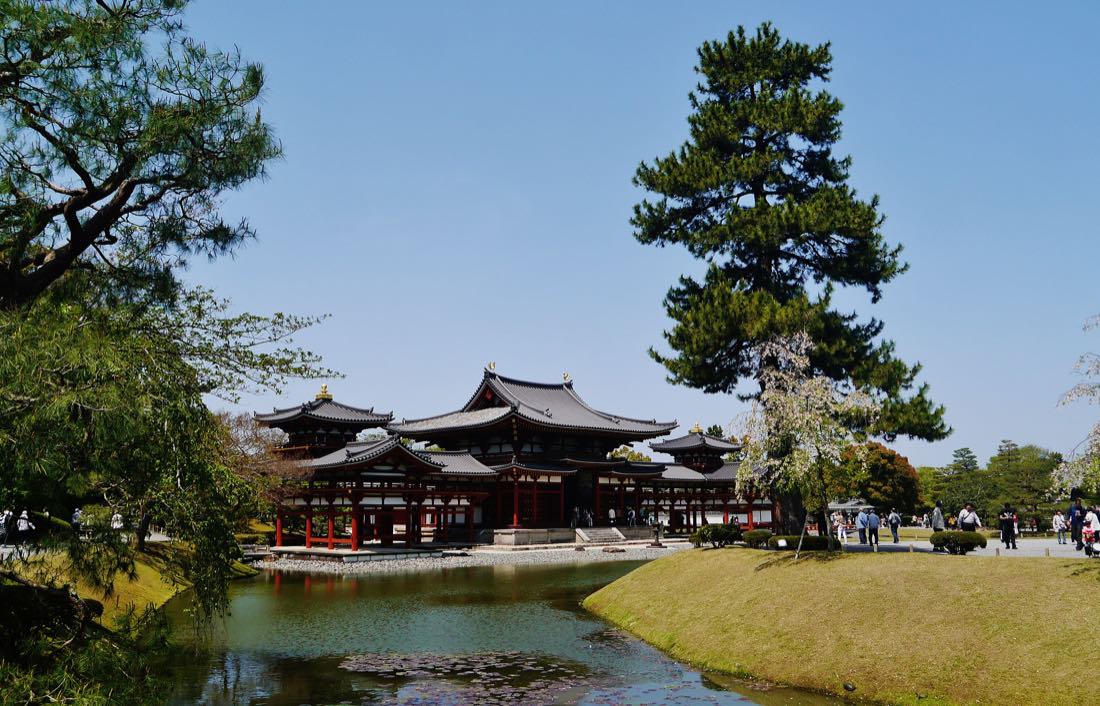
Byodo-in, ¥600 for the grounds and museum plus ¥300 more for a timed 20-minute entry into the Phoenix Hall itself. The hall was built in 1053, survived everything that flattened the rest of Heian Japan, and is on the back of the ¥10 coin — check your change. The interior slot sells a limited number of tickets each hour on the day; buy it when you arrive rather than at the end. The modern underground Hoshokan museum holds the original phoenixes and bodhisattva carvings and is included.
Ujigami Shrine, free, across the river, holds the oldest surviving shrine building in Japan — around 1060 — under a protective outer structure. It takes fifteen minutes and almost nobody goes. Next to it, Uji-jinja and the wooded path up the hill make a quiet loop back to the bridge.
The tea shops on the Byodo-in approach roast in the street, which means the whole road smells of hojicha. Buying tins here is the point of the trip. Note the matcha shortage is real — the May 2025 tencha auction averaged a record ¥8,235 per kilo — so the good tins sell out during the day. Buy in the morning.
The Nintendo Museum is one stop away at Ogura, opened October 2024, ¥3,300 adult / ¥2,200 teen / ¥1,100 child, closed Tuesdays. Entry is by lottery about three months ahead through a Nintendo Account, with results on the 1st of the following month and cancellation tickets appearing roughly two months out. Tickets are named and QR-coded, so resold ones do not work. Full detail on the Nintendo Museum page.
In summer, cormorant fishing runs on the river in the evenings — trained birds, torchlight, from a boat. In autumn the Uji river gorge upstream toward Amagase is quiet and good walking. This is also Tale of Genji country: the final ten chapters are set here, and there is a museum about it near Ujigami Shrine.
The matcha queue map — where to actually drink it
Uji has one very famous tea house and several better decisions. Waits are for a Saturday in high season; weekday mornings are far shorter everywhere.
| Where | What you get | Price | Typical wait | Verdict |
|---|---|---|---|---|
| Nakamura Tokichi Honten, Uji | The famous matcha jelly and parfait | ¥1,000–1,800 | 2–4 hours, documented | SKIP |
| Nakamura Tokichi, Kyoto Station branch | The same menu, same kitchen | ¥1,000–1,800 | 20–40 min | WORTH IT |
| Itohkyuemon, Uji | Parfaits, soba, soft serve, big premises | ¥900–1,600 | 15–45 min | WORTH IT |
| Taihoan, the municipal tea house | A proper 30-min tea ceremony, no frills | ¥1,000 | Usually none | WORTH IT |
| Fukujuen Uji Tea Workshop | Grind your own tencha into matcha, then drink it | ~¥1,650 | Book ahead | WORTH IT |
| Approach-street tea shops | Tins to take home, free sniffing, sometimes tastings | ¥1,000–5,000 a tin | None | WORTH IT |
Recent reviews of the Uji flagship are blunt: good, but not two-to-four-hours good, and the Kyoto Station branch serves the same thing. If you only do one paid tea thing in Uji, make it Taihoan at ¥1,000 — a real tea ceremony run by the city, not a performance.
Where to eat in Uji
Uji eats green. Matcha soba, matcha rice, matcha everything on the approach street — and then a small number of genuinely good riverside restaurants that almost nobody stays late enough to find.
Lunch: cha-soba (green tea soba) sets run ¥1,000–1,800 along the Byodo-in approach and at Itohkyuemon's larger premises. It is a real regional dish rather than a gimmick. Grilled river fish and unagi appear on menus near the bridge at ¥2,500–4,000.
Sweets: matcha soft serve at ¥400–500 is everywhere and generally excellent because the tea is local. Parfaits at ¥1,000–1,800 are the thing people queue for. If you want the ceremony rather than the dessert, Taihoan is ¥1,000 for a proper bowl and a sweet, served by the city's own tea instructors.
Evening: Uji empties. Most of the approach street closes by 17:00 to 18:00 and the town is quiet by 19:00, which is precisely why staying overnight is pleasant. Riverside ryokan such as Hanayashiki Ukifune-en serve kaiseki in-house — book the meal plan, because there is no fallback.
The wider tea picture, including how to buy matcha you will actually use at home, is on the matcha page.
Uji, practically
Sleeping in Uji, and seeing it properly
Staying here is a money play and a quiet-evening play, not a convenience one. Byodo-in takes cash at the gate and never sells out; the Nintendo Museum is the only thing in Uji you genuinely have to plan around. Temple gates take cash at the door and never sell out — a tour is worth paying for because of the guiding and the hour, not to skip a queue that does not exist.
Two ways to do matcha without queueing
Both of these book ahead, both are indoors, and both teach you more in an hour than a parfait will. If you want the ceremony version instead, Taihoan is ¥1,000 walk-in and hard to beat.
Uji FAQ
Is Uji worth visiting?
Yes, for half a day. It is 17 minutes and ¥240 from Kyoto Station, and it gives you Byodo-in's Phoenix Hall at ¥600, the oldest shrine building in Japan for free, and the best tea in the country. Make it a full day only if you have Nintendo Museum tickets.
Is Nakamura Tokichi in Uji worth the wait?
No. Waits of two to four hours are documented on busy days and recent reviews are increasingly blunt that the matcha jelly does not justify them. The same company's Kyoto Station branch serves the same menu with a 20–40 minute wait, and Itohkyuemon in Uji is a good substitute.
How much is Byodo-in?
¥600 for the grounds and the Hoshokan museum, plus ¥300 more for a timed 20-minute entry inside the Phoenix Hall. Buy the interior ticket when you arrive rather than at the end — a limited number are sold for each time slot on the day.
How do you get from Kyoto to Uji?
JR Nara Line rapid from Kyoto Station, 17 minutes, ¥240 — the same line as Fushimi Inari, which is 12 minutes back up the track. The Keihan route via Chushojima is slower but lets you combine Uji with the Fushimi sake district in one day.
Does Uji charge the Kyoto lodging tax?
No. Uji is a separate municipality, so Kyoto's per-person-per-night accommodation tax — ¥200 to ¥10,000 depending on room rate since 1 March 2026 — does not apply. Nara and Otsu are the same. It is the cleanest legal workaround if you are staying a week.
Can I do Uji and Fushimi Inari in one day?
Easily, and it is the best-value half-day in Kyoto. Fushimi Inari at 06:30, back on the JR by 09:00, in Uji by 09:15, temples and tea until lunch, home by mid-afternoon. Total train cost about ¥390.
Do I need to book the Nintendo Museum in advance?
Yes, and far in advance. Entry is by lottery roughly three months ahead through a Nintendo Account, with results published on the 1st of the following month. Cancellation tickets surface about two months out — that is the real backdoor. Tickets carry your name and a QR code, so buying resold ones does not work.
What is Taihoan?
Uji's municipal tea house, ¥1,000 for about half an hour: a proper tea ceremony run by the city's own instructors, with no performance and no upsell. It is the cheapest and most honest tea ceremony in the Kyoto area and it rarely has a queue.