ThingstodoKyoto
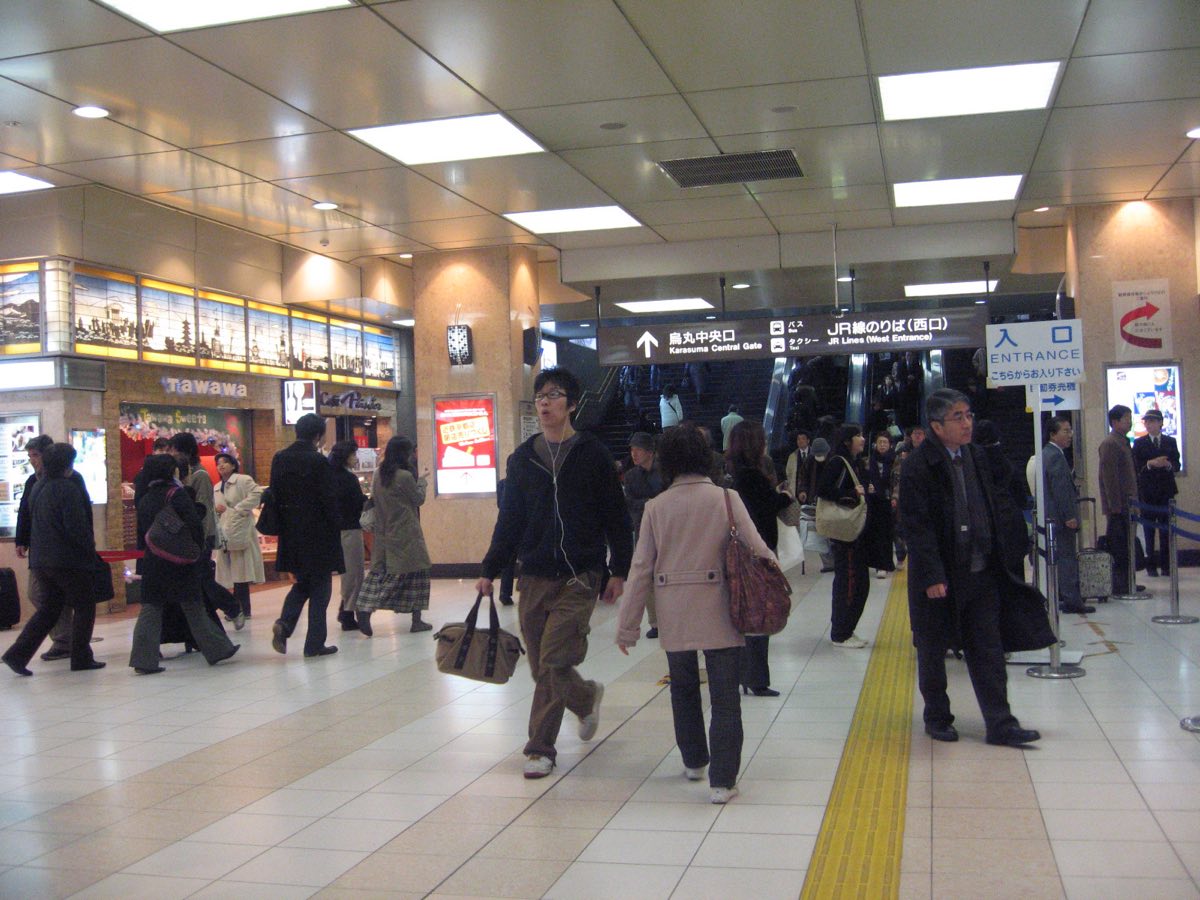
The steel-and-glass concourse of Kyoto Station
Hub · Transport & arrival

Getting around
Kyoto

KIX ¥2,200Bus fare ¥230JR Pass: no

Kyoto is a rail city with a bus system bolted on badly. Almost every transport mistake visitors make is a bus they did not need to take. Here is the arrival, the passes, the verdicts and the 2026 changes.

Photo: Terence Ong
Quick answer
WORTH IT — trains and walking. Not buses

Use trains, the subway and your feet. Kyoto's city buses are the worst experience the city offers — one flat fare of ¥230, no space for luggage, and the 205 at peak is a byword for misery. The city abolished the ¥700 tourist bus day-pass in 2023 specifically to push visitors onto rail, which tells you everything. From Kansai Airport, the tourist-only Haruka one-way e-ticket is ¥2,200 against ¥3,110+ at the machine — the single best arrival hack in Japan. And no, the JR Pass is not worth it: Tokyo–Kyoto–Osaka point-to-point is about ¥30,600 against ¥50,000 for a 7-day pass.

Haruka ¥2,200Bus flat ¥230Subway+Bus 1-day ¥1,100JR Pass: skip
Arrival

Getting from Kansai Airport to Kyoto

Three options, and the answer is usually the Haruka. KIX to Kyoto Station is 75 minutes by train, roughly 90 by bus, and 90–120 by car depending on traffic.

1. The JR Haruka limited express — ¥2,200 with the tourist e-ticket. This is the one to know. The Haruka runs direct from KIX to Kyoto Station in about 75 minutes, and the standard unreserved fare is ¥3,110 or more. A discounted one-way e-ticket sold only to foreign passport holders costs ¥2,200 and is bought online through JR West's own site or a reseller before you fly. You collect or scan it at the airport station. Same train, same seat, roughly ¥900 saved each way — there is no catch, and it is the single best-value transport decision of the trip.

2. The airport limousine bus — around ¥2,600, 90 minutes. Runs from KIX Terminal 1 to Kyoto Station's Hachijo (south) exit. Slower and marginally more expensive than the discounted Haruka, but it swallows luggage without a fight and you do not change trains. Take it if you land late, if the Haruka has stopped running, or if you are travelling with more suitcases than hands.

3. A private transfer — the with-luggage answer. Around ¥25,000–30,000 for a car that fits four people and their bags, door to door, at whatever hour your flight lands. Per person it stops looking silly at three or four travellers, and it is the obvious call with small children, an overnight arrival, or a machiya check-in down an alley no bus goes near.

Which terminal, and the one trap: KIX Terminal 2 is a shuttle ride from the rail station, so add 15 minutes if you flew a low-cost carrier. And do not fly into KIX and then buy a Shinkansen ticket to Kyoto — there is no Shinkansen from KIX. Shin-Osaka is a change and a detour, and the Haruka goes direct.

Arrival

Getting from Tokyo to Kyoto

The Nozomi is 2 hours 15 minutes and ¥13,320–14,370 one way, reserved. There is no faster or cheaper way that is worth your time, and the bus takes eight hours overnight to save ¥5,000.

Book in the SmartEX app. Reservations open 30 days ahead, the app is in English, and it takes foreign cards. You only genuinely need to reserve around Golden Week (29 April–6 May), Obon (8–16 August) and New Year — the rest of the year there are unreserved cars and trains every ten minutes. One hard exception: oversized luggage now requires a specific reserved seat with a baggage space behind it, booked in advance and free, and turning up with a large case in an unreserved car earns you a ¥1,000 penalty and a bad conversation.

Note the Nozomi is excluded from the JR Pass. Pass holders take the Hikari, which is 2 hours 40 minutes — 25 minutes slower, several times an hour. That gap is one of several reasons the pass math rarely works out.

What experienced travellers actually do with their bags: takkyubin. Hand your suitcase to a counter at your Tokyo hotel or a conbini, pay ¥2,000–3,000 per bag, and it arrives at your Kyoto hotel the next day. You ride the Shinkansen with a daypack, you skip the luggage-seat rules entirely, and you do not drag a case up Kiyomizu's slope. Send it the day before you move and pack an overnight bag.

Compared

Every Kyoto transport pass, with a verdict

Prices are 2026 adult fares. The short version: most visitors need no pass at all, because a normal Kyoto day is two train rides and a lot of walking.

PassPriceWhat it coversBuy it ifVerdict
Subway & Bus 1-Day Pass¥1,100 · child ¥550Both subway lines plus city and Kyoto buses, one calendar dayYou will make four or more rides in a day — rarer than you thinkDEPENDS
Subway-only 1-Day Pass¥800Karasuma and Tozai lines onlyYou are hopping downtown–Nijo–Higashiyama repeatedly in one dayDEPENDS
Kansai Thru Pass, 2 days¥4,380Every non-JR train, subway and bus in Kansai — including the Eizan line to Kurama and the bus to OharaYou are doing Kurama, Ohara, Osaka and Nara in a two-day window. The only pass that unlocks the mountainsWORTH IT
Hankyu Tourist Pass¥700 per dayThe whole Hankyu network, including Kyoto Kawaramachi to Osaka UmedaYou are commuting between Kyoto and Osaka and want to land downtown rather than at the stationDEPENDS
Randen 1-day pass¥700The Arashiyama tram, all dayYou are doing Arashiyama plus Kinkaku-ji or Ryoan-ji in one day. Flat single fare is ¥250DEPENDS
Single city bus ride¥230 flatAny ride inside the flat-fare zone. Pay on exitYou have no alternative — which on this site's routes is almost neverSKIP
EX100 / EX101 tourist express¥500 flatKyoto Station → Kiyomizu → Gion → Heian Shrine → Ginkaku-ji, weekends and holidays only, every 7–8 minutes at morning peakIt is a Saturday and you are doing Higashiyama. The one bus on this page worth takingWORTH IT
Kansai Wide Area Pass, 5 days¥12,000JR across Kansai including Himeji, Kinosaki, Kobe, Okayama and the Haruka from KIXYour trip includes Himeji plus Kinosaki or Kobe. This is the pass that actually paysDEPENDS
Japan Rail Pass, 7 days¥50,000All JR nationwide except the Nozomi and MizuhoYou are crossing the country twice in a week. For Tokyo–Kyoto–Osaka it loses about ¥19,000SKIP
ICOCA IC card¥2,000 incl. ¥1,500 creditTap on every train, subway, bus, conbini and vending machine nationwideAlways. This is the default answer for everyoneWORTH IT

IC cards, updated: Suica and Pasmo card sales resumed in March 2025 after the chip shortage, and ICOCA — the Kansai card — has been freely available throughout. iPhone users can skip the plastic entirely and add Welcome Suica Mobile in Apple Wallet before they land. Any of the three works on any of the others' networks.

The verdict

The JR Pass is not worth it for a Kansai trip

For the standard Tokyo–Kyoto–Osaka route, a 7-day Japan Rail Pass costs ¥50,000 and replaces about ¥30,600 of point-to-point tickets. You would be paying ¥19,400 for the privilege of taking slower trains.

The pass went up sharply in October 2023 and has not made sense for a single-region trip since. It also excludes the Nozomi, so your Tokyo–Kyoto run becomes a 2h40 Hikari instead of a 2h15 Nozomi. The pass is for people crossing Japan more than twice in a week — Tokyo, Kanazawa, Hiroshima, Fukuoka — not for people basing in Kyoto.

The pass that does pay is regional. The Kansai Wide Area Pass at ¥12,000 for 5 days covers Himeji (¥2,310 each way), Kinosaki Onsen (about ¥5,000 each way), Kobe, Okayama and the Haruka from KIX. Two of those trips and it has paid for itself. If your Kyoto trip has no long JR day trips in it, buy nothing and tap an IC card.

For day trips specifically: Nara is ¥760 by Kintetsu, which is not JR at all; Uji is ¥240; Osaka is ¥580 on the JR Special Rapid, never the Shinkansen. Those numbers are why the pass math fails. See the day-trips hub for the full fare list.

Inside the city

Taxis, bikes and the honest bus verdict

Two Kyoto-specific truths nobody tells first-timers: the taxi to Kiyomizu is cheap enough to be the right answer, and Kyoto is flat enough that a bicycle beats everything.

Take the taxi to Kiyomizu-dera. From Kyoto Station it is roughly ¥1,000–1,500 and about 15 minutes. The bus is ¥230, takes 40 minutes in traffic, and drops you at the bottom of the same hill. Split between two people the taxi costs each of you ¥600 and buys back half an hour at the best time of day. Kyoto taxi doors open and close by themselves — do not touch them — and every driver takes cards.

Rent a bike. Kyoto is a flat grid, roughly 8km across the useful part, with river paths and quiet backstreets. Rentals run ¥1,000–1,500 a day, e-bikes ¥2,500–3,500. It is genuinely the best way to move around the city and it makes the northwest temples — Daitoku-ji, Kinkaku-ji, Nishijin — a pleasant afternoon instead of a bus problem. Park only in marked bicycle lots; Kyoto impounds bikes and the release fee is ¥2,300.

The bus verdict, stated plainly. Avoid them. One flat ¥230 fare, board at the back, pay on exit, and expect to stand. The routes that matter to tourists — the 100, 205, 206 — are the ones that are full. Kyoto's own tourism policy has been pushing visitors off buses since 2023, and the city officially asks you not to board with large suitcases. The exception is the EX100 and EX101 tourist express, weekends and holidays only, flat ¥500, running Kyoto Station to Kiyomizu, Gion, Heian Shrine and Ginkaku-ji every 7–8 minutes at morning peak. That one is good.

Walking distances that surprise people: Kyoto Station to downtown Shijo is 25 minutes on foot or 5 minutes on the Karasuma subway (¥220). Gion to Kiyomizu is 20 minutes uphill. Ginkaku-ji to Nanzen-ji is 45 minutes along the Philosopher's Path and is a highlight, not a chore. Arashiyama to anything is a train.

The rules

Four Kyoto rules with real consequences

Kyoto in 2026 is a city actively managing tourist behaviour. These four are enforced, signposted, or both.

The private alleys off Hanamikoji are closed

Since April 2024 the small private lanes running off Gion's Hanamikoji have been closed to tourists, with signs in four languages. The main Hanamikoji street itself is still open and always has been. Photographing geiko or maiko without their consent has been banned since 2019, and following one down a street is the behaviour that caused all of this. Stay on the public street, keep the phone down when someone in full dress passes.

Up to ¥10,000
Do not board a city bus with a large suitcase

Kyoto officially asks visitors not to bring large luggage onto city buses, and on a packed 205 you will find out why within one stop. Use a staffed bag drop or a coin locker — though station lockers at Kyoto Station are reliably full by 10:00 in high season — or forward the bag ahead by takkyubin for ¥2,000–3,000.

Eat at the stall in Nishiki Market

Walking while eating is discouraged the length of Nishiki, and most stalls now have a small counter or a bin beside them for exactly this. Buy, stand, eat, bin, move. It is not a fine — it is the one piece of etiquette that visibly separates visitors who read something from visitors who did not. More on Nishiki.

Taxi doors open themselves

The rear left door is driver-operated on every taxi in Japan. Do not grab it, do not slam it. Fares start around ¥500 for the first 1km, cards and IC are accepted everywhere, and there is no tipping in Japan, ever — leaving change on the seat causes a small crisis.

2026 changes

What is new for a 2026 traveller

Four money and admin changes landed in 2026, and one much-repeated rumour has not. Full detail and a calculator on the cost page.

The Kyoto lodging tax rose on 1 March 2026 and is now charged per person per night on a five-tier scale: ¥200 under ¥6,000 a night, ¥400 from ¥6,000–19,999, ¥1,000 from ¥20,000–49,999, ¥4,000 from ¥50,000–99,999, and ¥10,000 at ¥100,000+. A typical mid-range visitor pays ¥400 a night. It is collected at check-in, usually in cash.

Japan's departure tax tripled to ¥3,000 per person on 1 July 2026. It is built into your airline ticket, there is no queue and no form, and it applies to everyone over the age of two.

Tax-free shopping becomes a refund system on 1 November 2026. You pay the 10% consumption tax at the till and claim it back at customs before departure, with card refunds landing in one to two weeks. The ¥5,000 minimum purchase stays; the ¥500,000 consumables cap and the sealed-bag rule are abolished, which is good news if you are buying knives, ceramics or matcha.

Dual pricing is spreading, but not in Kyoto's temples. Himeji Castle has charged ¥2,500 for non-residents against ¥1,000 for residents since March 2026. No Kyoto temple has adopted it. The city has floated dual-priced transit fares and national guidelines are due in March 2027 — worth watching, not worth planning around.

JESTA is not a thing yet. Japan's planned electronic travel authorisation is expected around 2028 and does not exist today. There is nothing for a 2026 traveller to apply for, pay for, or fill in, and any site charging you for one is a scam. Visa-exempt nationals still just turn up with a passport and use the Visit Japan Web portal for the immigration and customs QR codes, which is free.

The rest of the admin

Cash, eSIMs, luggage and insurance

Japan is far more cash-dependent than its reputation suggests, and Kyoto's temples are the most cash-dependent part of it. Carry ¥10,000–20,000 a day.

Cash. Every temple gate, most small restaurants, the Monkey Park and a lot of Nishiki take cash only. 7-Eleven ATMs accept foreign cards reliably, are open 24 hours, and are on nearly every block — they are the default. Japan Post ATMs work too but keep shorter hours. Withdraw at the airport on arrival so you are not hunting at 7am on temple morning.

Connectivity. An eSIM is the least painful option: install before you fly, land connected, no counter queue, no physical SIM to lose. Expect roughly $5–20 for a week depending on data. Free wi-fi exists at stations and conbini and is not good enough to navigate a bus timetable on.

Luggage. Kyoto Station's coin lockers fill by 10:00 in high season — this is the most reliably reported logistics failure of a Kyoto trip. Book a staffed bag-drop point instead; there are more than ten in central Kyoto, they take suitcases of any size, and they run around ¥600 a bag a day. For city-to-city moves, takkyubin forwarding at ¥2,000–3,000 per bag next-day beats dragging a case through Shinkansen luggage rules.

Insurance. Japanese healthcare is excellent and expensive to a foreign visitor without cover. Nothing on this trip is high-risk, but the Kurama ridge hike, a rented bicycle and a slippery Kiyomizu slope in rain are all the sort of thing a policy exists for.

Book it

Arrival and connectivity, sorted before you fly

Three bookings worth making from home. The Haruka e-ticket itself is bought direct from JR West or a rail reseller — the transfer below is the alternative when you land with luggage or at an awkward hour.

Our pick
GetYourGuide
Kansai Airport private transfer to or from Kyoto
$180 per vehicle, from
Door to door, meets your flight, fits four people and their cases. Per person it beats the limousine bus at three or four travellers, and it is the obvious answer for a late landing or a machiya down an alley.
Check prices ↗
GetYourGuide
Kansai area rail pass
$80 per person, from
The regional pass that actually pays, unlike the national one. Worth pricing if your trip includes Himeji plus Kinosaki or Kobe — two of those trips and it clears its own cost.
Compare passes ↗
Airalo
Japan eSIM
$5 per week, from
Install before you fly and land connected. No counter queue at KIX, no physical SIM. Check your phone is eSIM-capable and carrier-unlocked first — anything from the last five years usually is.
See data plans ↗
Questions people actually search

Kyoto transport FAQ

How do I get from Kansai airport to Kyoto?

Take the JR Haruka limited express, 75 minutes direct to Kyoto Station. Buy the tourist-only one-way e-ticket online before you fly for ¥2,200 instead of paying ¥3,110 or more at the machine — it is the same train. The limousine bus is about ¥2,600 and 90 minutes if you are heavy on luggage.

Is the JR Pass worth it for Kyoto?

No. For a Tokyo–Kyoto–Osaka trip you would spend about ¥30,600 on point-to-point tickets against ¥50,000 for a 7-day pass, and the pass excludes the fast Nozomi trains. If you are adding Himeji, Kinosaki or Kobe, price the ¥12,000 Kansai Wide Area Pass instead.

Should I buy a Kyoto bus pass?

Probably not. The ¥700 tourist bus day-pass was abolished in 2023–24 to move visitors onto rail. The surviving Subway & Bus 1-Day Pass is ¥1,100 and needs four or more rides to break even, and a well-planned Kyoto day involves two train rides and a lot of walking.

How much cash do I need per day in Kyoto?

¥10,000–20,000 per person per day is the safe range, because temple gates, small restaurants and market stalls are cash-only. 7-Eleven ATMs take foreign cards, are open 24 hours and are everywhere. Trains, department stores and taxis all take cards and IC.

Suica, ICOCA or Pasmo — which IC card in Kyoto?

Any of them; they are mutually accepted nationwide. ICOCA is the Kansai card and is freely available at Kyoto Station for ¥2,000 including ¥1,500 of credit. Suica and Pasmo sales resumed in March 2025, and iPhone users can add Welcome Suica Mobile to Apple Wallet before they even land.

Do I need a JESTA or visa to visit Japan in 2026?

No JESTA — it does not exist yet and is expected around 2028, so there is nothing to apply for. Visa-exempt nationals arrive with a passport. Do fill in Visit Japan Web before you fly for the immigration and customs QR codes; it is free and saves ten minutes at KIX.

Is it worth taking a taxi in Kyoto?

For specific runs, yes. Kyoto Station to Kiyomizu-dera is roughly ¥1,000–1,500 and 15 minutes against 40 minutes on a packed bus for ¥230 — split two ways that is the best money you will spend all morning. Doors open automatically, cards are accepted, and nobody tips.

Where can I leave my luggage in Kyoto?

Book a staffed bag drop rather than trusting a coin locker — Kyoto Station's lockers are reliably full by 10:00 in high season. There are more than ten drop points in central Kyoto at around ¥600 a bag a day. Between cities, takkyubin forwarding is ¥2,000–3,000 per bag, next-day delivery.