Is Kinkaku-ji
worth it?
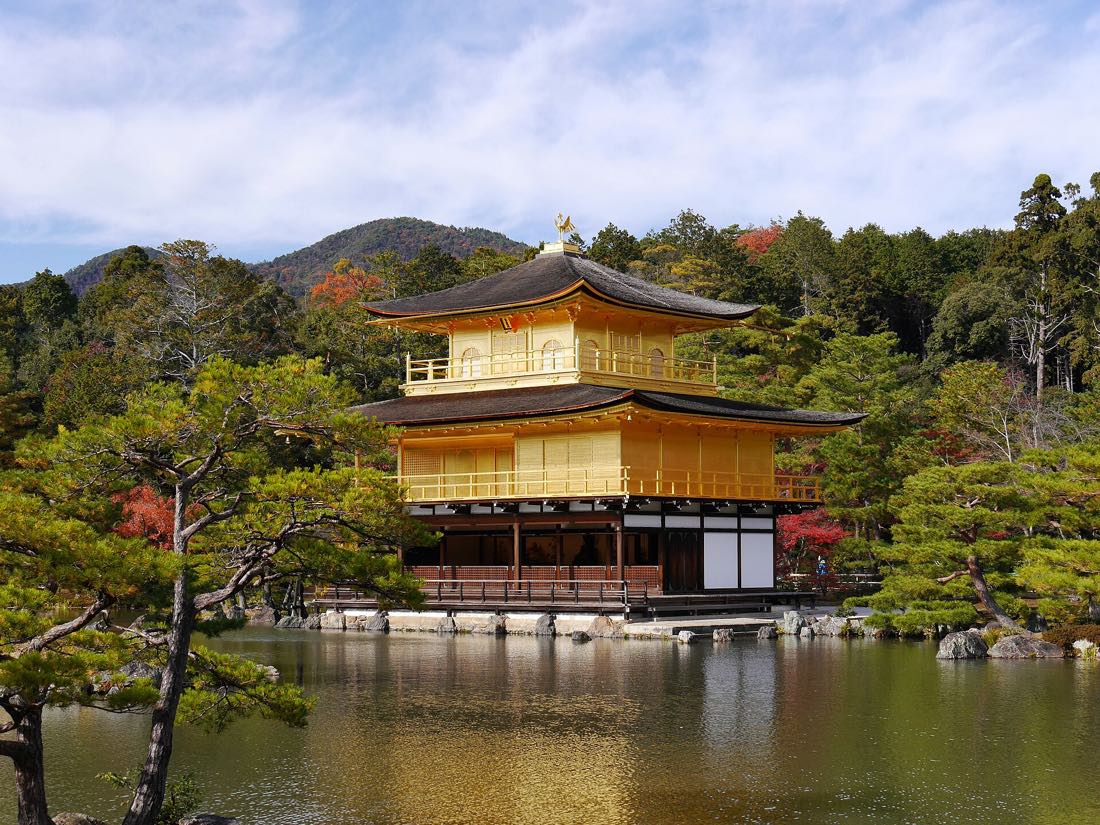
Kinkaku-ji earns its ¥500 and its reputation: a three-storey pavilion sheathed in gold leaf sitting in a mirror pond, and it looks exactly as good in person as in the photograph. What nobody tells you is that you cannot go inside — you view it from across the water on a fixed, one-way, no-backtracking path. That makes crowd density the entire experience. Be at the gate by 8:45 for the 9:00 opening, take your photograph in the first ten minutes, and you are back out by 9:40 having had a genuinely good visit.
What hour to go
Kinkaku-ji has the narrowest good window of any major Kyoto sight, because the path is one-way and the pond viewpoint is a single stretch of railing. There is no walking further on to escape — either you are there at opening or you are in the queue.
The only hour that matters. Arrive 8:45, be through the gate at 9:00, and you get the pond view with maybe thirty other people instead of three hundred.
What to expect at Kinkaku-ji
A 40-minute walk on a fixed loop, with one great view at the start and a pleasant garden afterwards. Manage that expectation and you will love it. Expect a temple you can explore and you will be annoyed.
The pavilion's top two floors are covered in gold leaf, re-applied in the 1987 restoration at roughly five times the original thickness. The building you are looking at is a 1955 reconstruction — a novice monk burned the original down in 1950, the event Yukio Mishima built a novel around. That does not make it less beautiful, but it is worth knowing before someone tells you it is 600 years old.
You cannot go inside. Not on any ticket, not on any tour, not on any day. Viewing is from the far side of Kyoko-chi, the mirror pond, and the path from there is one-way — once you have moved on you cannot walk back for a second attempt at the shot. Take your photographs in the first five minutes.
After the pond the loop climbs past the Anmintaku pond, a couple of small shrines where people throw coins at a stone bowl, and the Sekkatei teahouse, then exits past a stall selling matcha and a sweet for around ¥500. The whole thing is 30 to 45 minutes at a normal pace. There is no way to slow it down and no reason to.
One detail worth knowing: your ticket is not a ticket. It is a paper ofuda talisman printed with calligraphy, meant to be taken home and kept for household protection. It is the best free souvenir in Kyoto and people routinely bin it by accident at the exit.
Snow. A dusting of snow on the gold roof is the single most spectacular sight in Kyoto and it is why photographers keep January free. Be realistic about the odds: Kyoto averages roughly 10 to 15 days of snowfall across a whole winter, and most of it does not settle past breakfast. Treat a snow morning as a lottery win you happen to be in town for — never as something you can plan a trip around.
Is Kinkaku-ji for you?
The practical bit
Tours that make the northwest work
The reason to book anything here is transport, not access. Kinkaku-ji is the worst-connected major sight in Kyoto and the bus route to it is the one locals warn you about. Temple gates take cash at the door and never sell out — a tour is worth paying for because of the guiding and the hour, not to skip a queue that does not exist.
What to pair with Kinkaku-ji
Kinkaku-ji is 40 minutes, which makes it half a morning at most. The saving grace of the northwest is that three good temples sit within walking or one-bus-stop distance.
Ryoan-ji is ¥600 and a 20-minute walk southwest. Fifteen rocks in raked gravel, arranged so you can never see all fifteen at once from any single position on the veranda. Sit for twenty minutes and it is profound; photograph it and leave and it is a gravel rectangle with a crowd. Your call which visit you have.
Ninna-ji is another ten minutes past Ryoan-ji, with a five-storey pagoda, an enormous and near-empty compound, and late-blooming dwarf cherry trees that flower a week or two after the rest of Kyoto has finished. The grounds are free; the palace buildings are a separate ticket.
Daitoku-ji is the better call if gardens are what you came for — a walled complex of two dozen subtemples, four or five of which open to visitors for ¥300 to ¥400 each. Almost nobody goes. It is on the temples nobody visits list for good reason.
Do not bolt Ginkaku-ji onto this day. The two pavilions sit on opposite corners of the city and joining them costs you an hour on a bus. The full comparison explains which one to pick if you only have time for one.
Kinkaku-ji FAQ
Can you go inside the Golden Pavilion?
No. There is no ticket, tour or season that gets you inside — the pavilion has been closed to visitors since the 1955 reconstruction. You view it from across the pond, from a fixed path, and that is the entire experience. Anyone selling interior access is selling something that does not exist.
What time should I go to Kinkaku-ji to avoid crowds?
Be at the gate at 8:45 for the 9:00 opening. The first thirty minutes are genuinely calm; from 10:00 the coach groups arrive and the pond railing becomes a moving queue. The second-best slot is 16:00, when the groups have gone and the low sun actually lights the gold leaf.
How much does Kinkaku-ji cost in 2026?
¥500 for adults and ¥300 for children, cash at the gate, as of this August 2026 update. There is an unverified rumour circulating about a rise to ¥800 during 2026 — we have not been able to confirm it, so check the price board at the entrance rather than trusting a blog post.
How long do you need at Kinkaku-ji?
Thirty to forty-five minutes. The path is one-way and roughly 500 metres long, and once you have passed the pond viewpoint you cannot walk back to it. Budget 40 minutes and use the rest of the morning on Ryoan-ji, ¥600 and a 20-minute walk away.
How do I get to Kinkaku-ji from Kyoto Station?
There is no train. Bus 101 or 205 takes 40 to 50 minutes for ¥230 and is regularly standing-room-only. A taxi runs ¥2,000 to ¥2,500 from downtown and is the option most people wish they had taken. If you are coming from Arashiyama, the Randen tram to Kitano-Hakubaicho is far more pleasant than any bus.
Is Kinkaku-ji worth it in the snow?
It is the best sight in Kyoto with snow on it, and photographers block out January for exactly that. But Kyoto only gets around 10 to 15 snowfall days across a whole winter and most of it melts by mid-morning. Enjoy it if it happens; do not book a trip on it.
Is the ticket really a talisman?
Yes — Kinkaku-ji hands you a paper ofuda printed with calligraphy instead of a stub. It is meant to be kept at home for household protection. Do not throw it away at the exit gate, which is what most visitors do without realising.