Free things to do
in Kyoto
Kyoto's single best sight costs nothing, and so do two of its largest buildings. Here is everything genuinely free, ranked, with the paid thing each one replaces.
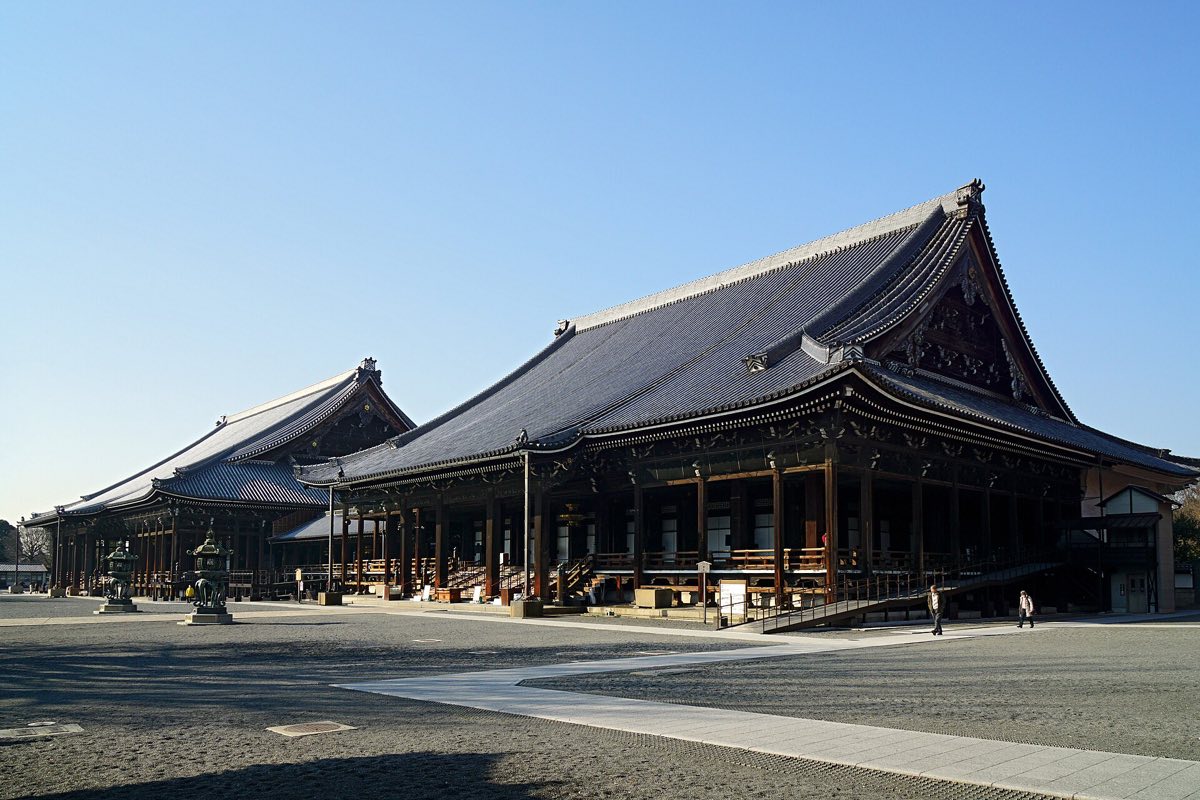
Fushimi Inari costs nothing, has no gate and never closes, and it is the top-ranked sight in the city on this site. After that: Higashi and Nishi Honganji, two of the largest wooden buildings on earth, free, ten minutes from Kyoto Station and usually near-empty. Then Nanzen-ji's grounds and its brick aqueduct, the Philosopher's Path, the Kyoto Imperial Palace (free, walk-in, closed Mondays), and Kyoto Station's own Skyway and Sky Garden — which is the free answer to Kyoto Tower's ¥900.
Fourteen genuinely free things
- 01
Fushimi Inari Taisha
No ticket, no gate, no closing time, at any hour of any day. Around 10,000 torii gates on a 4km mountain loop, five minutes and ¥150 from Kyoto Station on the JR Nara Line. Anyone selling you priority entry is selling something that does not exist. Go at 06:00 or after 21:00 and it is the best free experience in Japan.
- 02
Higashi Honganji and Nishi Honganji
Two of the largest wooden structures in the world, both free, both a short walk from Kyoto Station, and both routinely empty while people queue elsewhere. Higashi Honganji's Goei-do is colossal in a way photographs cannot convey. Look for the coils of rope woven from human hair, donated by women during the 19th-century reconstruction when hemp ropes kept snapping.
- 03
Nanzen-ji's grounds and the brick aqueduct
You can walk the entire temple complex for nothing. A Meiji-era red-brick aqueduct still carrying water runs straight through it, which is one of the strangest and best sights in Kyoto. Climbing the vast Sanmon gate costs ¥600 and is worth it, but the free version is already a full visit.
- 04
The Philosopher's Path
A canal-side stone path running two kilometres from near Ginkaku-ji down toward Nanzen-ji, lined with several hundred cherry trees. Free, flat, and lined with small free temples including Honen-in, which most people walk past. In early April it is one of the best blossom walks in Japan and it is also mobbed; in June and January you may have long stretches alone.
- 05
Kyoto Station's Skyway and Sky Garden
The direct free replacement for Kyoto Tower's ~¥900. A 171-step LED stairway that runs light shows in the evening, the Skyway walkway spanning the roof on the 11th floor, and a rooftop Sky Garden. The view is over a city with almost no tall buildings in it, so the ¥900 version is not meaningfully better.
- 06
Yasaka Shrine after dark
Open around the clock and free, and it changes completely at night when hundreds of paper lanterns bearing donors' names light the central stage. It sits at the top of Shijo-dori where Gion begins, so it is the natural start or end to a night walk. Maruyama Park behind it is also free and open.
- 07
Ishibei-koji and the Gion lanes at dusk
Ishibei-koji is a short curving stone lane behind Kodai-ji, widely called the most beautiful street in Kyoto, and it is not on any coach route. Combine it with Hanamikoji at around 17:45. Stay on public streets: the private alleys off Hanamikoji have been closed to visitors since April 2024 with signposted fines up to ¥10,000.
- 08
Nishiki Market, as a walk
Free if you treat it as a covered five-block walk rather than lunch, which is honestly the better use of it. Go before 10:00 or after 15:00 — tour groups flood it around 11:30. Prices have drifted to tourist levels and eating while walking is discouraged, so if you do buy, eat at the stall.
- 09
The Kamo riverbank and the Delta stones
The single most-used free space in Kyoto. Walk the west bank from Sanjo to Shijo in the evening and you will pass students, buskers and couples spaced along the water at almost equal intervals, which is a real and much-loved local habit. At Demachiyanagi the two rivers meet at the Delta, where stepping stones shaped like turtles and birds let you hop across.
- 10
Kyoto Imperial Palace
Free and no longer requires an application — walk in with your passport-free self during opening hours and take the marked route through the ceremonial halls and gardens. Closed Mondays. The surrounding Imperial Park is a vast free gravel-and-pine space that Kyoto residents use as a park, and almost no tour groups enter it.
- 11
Kitano Tenmangu on the 25th, To-ji on the 21st
Two of the best markets in Japan, both free to walk. Tenjin-san fills Kitano Tenmangu's grounds on the 25th of every month with antiques, textiles and food; Kobo-san does the same at To-ji on the 21st, with over a thousand stalls. Go early — by 11:00 both are shoulder to shoulder and the good kimono fabric has gone.
- 12
Takaragaike Park
A lake, woodland trails, wild deer, and effectively zero foreign visitors, at the northern terminus of the Karasuma subway. It is the clearest proof of this site's whole argument: twenty minutes from a Kyoto that is heaving, there is a large beautiful park with nobody in it.
- 13
Demachi Masugata shopping arcade
A short covered arcade near Demachiyanagi station that is still mostly a neighbourhood market — greengrocers, a fishmonger, a tofu shop, and Demachi Futaba's mochi queue, which is locals rather than tourists. It is what people imagine Nishiki was twenty years ago, and it costs nothing to walk.
- 14
Temple grounds in general
The most useful money-saving fact in Kyoto: most temples charge only for the garden or a specific hall, and the grounds themselves are free. You can walk into Nanzen-ji, Tofuku-ji, Chion-in, Kennin-ji's outer precinct, Daitoku-ji's lanes and the Honganji temples without paying anything. Budget the ¥500s for two or three you actually want to enter.
The free version of the paid thing
Straight swaps. In several of these the free option is not a compromise — it is simply better.
| The paid thing | Price | The free version | Verdict |
|---|---|---|---|
| Kyoto Tower observation deck | ~¥900 | Kyoto Station's 11F Skyway and rooftop Sky Garden, 200m away | SKIP |
| Gion Corner culture show | ¥5,500 | Hanamikoji and Shirakawa at 17:45, and Yasaka Shrine's lanterns after | DEPENDS |
| Kinkaku-ji | ¥500 | Nothing free matches it — pay the ¥500, go at 09:00 | WORTH IT |
| Heian Shrine garden | ¥600 | The shrine grounds and the enormous torii, free | DEPENDS |
| Okochi Sanso villa | ¥1,000 | The bamboo grove itself before 08:30, and Kameyama Park above it | WORTH IT |
| Tofuku-ji autumn bridge | ~¥1,000 in Nov | Nanzen-ji's aqueduct and grounds, free all year | WORTH IT |
| A guided city tour | $60–110 | The Philosopher's Path plus Nanzen-ji, self-guided in half a day | DEPENDS |
| Hop-on-hop-off bus | $25–40 | Walking Higashiyama end to end — it is 45 minutes | SKIP |
One paid exception worth naming: Shugakuin Imperial Villa is free but needs an advance application to the Imperial Household Agency. The Kyoto Imperial Palace, by contrast, is free and walk-in, closed Mondays.
Where a small spend goes furthest
This page is deliberately thin on bookings, because the point of it is that Kyoto's best sights are free. These three are the ones that add something the free version cannot.
Free things to do in Kyoto FAQ
Is anything in Kyoto actually free?
A great deal of it. Fushimi Inari is free and open 24 hours, both Honganji temples are free, Nanzen-ji's grounds are free, the Philosopher's Path is free, the Kyoto Imperial Palace is free and walk-in, and most temples charge only for a garden or a specific hall rather than for entry to the grounds.
What's the best free thing to do in Kyoto?
Fushimi Inari before 07:00 or after 21:00. It has no gate, no ticket and no closing time, and it is five minutes and ¥150 from Kyoto Station. It also ranks first on our paid-and-free list of things to do in the city, which is unusual for something that costs nothing.
Can you visit the Kyoto Imperial Palace for free?
Yes. Entry is free and no longer requires an advance application — walk in during opening hours and follow the marked route. It is closed on Mondays. Shugakuin and Katsura Imperial Villas are also free but do still require an advance application to the Imperial Household Agency.
How do I see Kyoto on a budget?
Pay for two or three temples you genuinely want to enter at ¥500–800 each, and take everything else from this page for nothing. Eat konbini breakfasts and lunch at a ramen or teishoku counter for ¥900–1,200. Skip the buses and walk. Around ¥6,000 a day is workable — the full arithmetic is on the cost page.
Is Kyoto Tower worth the money?
No. It is around ¥900 to look down on a city with almost no tall buildings. Kyoto Station's Skyway on the 11th floor and its rooftop Sky Garden are free, 200 metres away, and the view is barely different. Spend the ¥900 on two temple entries instead.
When are the Kyoto flea markets?
Kobo-san fills To-ji's grounds on the 21st of every month with well over a thousand stalls, and Tenjin-san does the same at Kitano Tenmangu on the 25th. Both are free to walk. Go before 10:00 — by late morning they are packed, and the good textiles and antiques have gone.
Are Kyoto's temple grounds free to walk around?
Usually, yes. Nanzen-ji, Tofuku-ji, Chion-in, Daitoku-ji's lanes and both Honganji temples let you walk the precincts for nothing; the charge applies to a garden, a hall or a gate. Fushimi Inari has no charge at all. The reliable exceptions are Kinkaku-ji, Ginkaku-ji, Kiyomizu-dera, Ryoan-ji and Nijo Castle, which charge at the entrance.