What to do in Kyoto
when it rains
Rain is not a lost day in Kyoto. It is the day the moss gardens look their best, the crowds halve everywhere, and the ¥3,800 thing you were unsure about becomes the obvious call.
The number one answer is teamLab Biovortex, ¥3,800, eight minutes' walk from Kyoto Station, tickets on the official site only. After that: the Kyoto Railway Museum (¥1,500, closed Wednesdays) and Sanjusangendo (¥600, entirely indoors, photography banned so it never fills). But the contrarian answer first — Kyoto's moss gardens are better in drizzle. Gio-ji at ¥300, Sanzen-in at ¥700 and the Daitoku-ji subtemples all look flat in sun and extraordinary wet, and you will have them to yourself.
Go to a moss garden. Seriously.
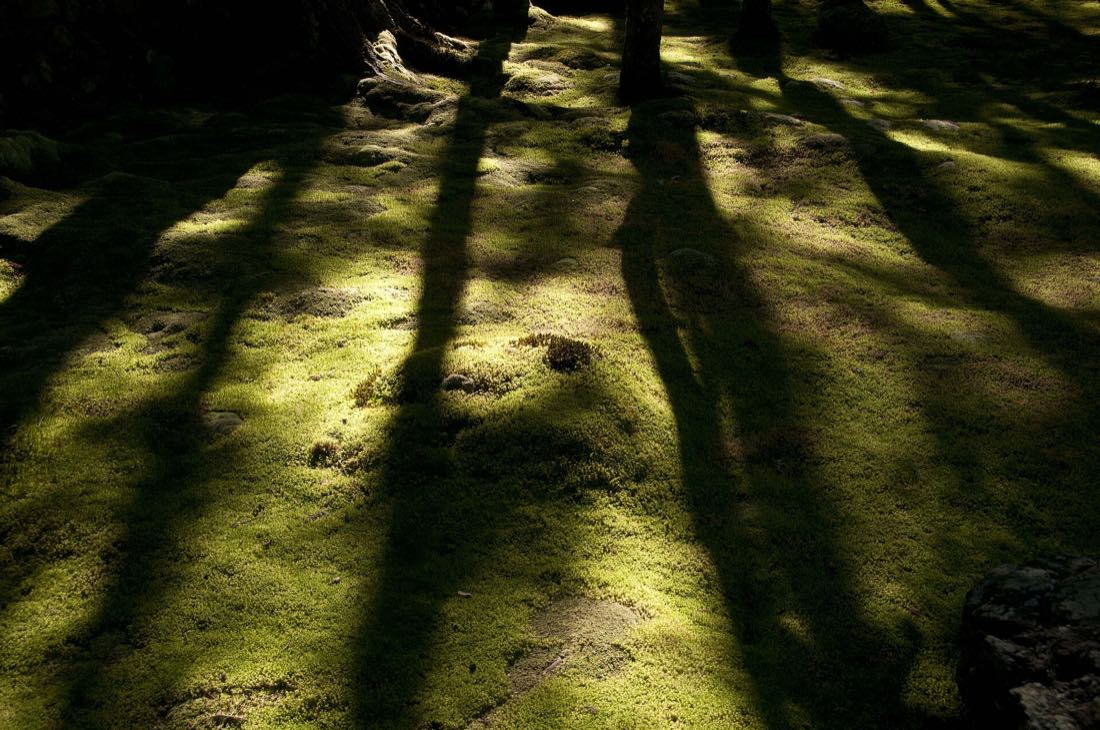
Every other rainy-day list sends you indoors. The single best thing about wet weather in Kyoto is that it transforms the gardens nobody photographs in the sun.
Moss needs water to look alive. In dry weather Kyoto's moss gardens read as grey-green carpet; in drizzle they go luminous, the stone darkens, and the whole composition finally does what it was designed to do. Gardeners in the city will tell you the same thing without prompting.
Gio-ji in northern Sagano is ¥300 and takes twenty minutes. A tiny thatched hut and a maple-shaded moss carpet, and on a wet weekday you may be the only person there. Pair it with Otagi Nenbutsu-ji, ¥500, whose 1,200 rakan statues wear moss like clothing and look their best soaked.
Sanzen-in in Ohara is ¥700, an hour out on bus 17 for ¥600, and its moss field studded with small stone figures is the picture that sells Kyoto in November. In rain, in June, with nobody in it, it is better.
The Daitoku-ji subtemples — Ryogen-in, Zuiho-in, Daisen-in at ¥300–400 each — put you on a covered veranda looking at raked gravel and moss with rain coming off the eaves. That is the experience. It is arguably the single most Kyoto thing available and it costs less than a coffee.
One more that nobody says out loud: Fushimi Inari is excellent in the rain. The torii tunnels are effectively covered, wet vermillion photographs beautifully, and the crowds roughly halve. It is free and open 24 hours. Wear something with grip — the stone steps get genuinely slippery.
Ten indoor answers, in order
- 01
teamLab Biovortex Kyoto
Opened 7 October 2025 and immediately the best answer to a wet day. ¥3,800 adult, ¥2,800 teen, ¥1,800 child, two to three hours, and eight minutes on foot from Kyoto Station so you barely get wet. Tickets are sold on the official site only — anything else is a reseller adding a margin. Timed entry, so book the slot before you commit to the day.
- 02
Kyoto Railway Museum
Fifty-three trains under one roof in Umekoji Park, twenty minutes' walk from Kyoto Station or one stop on the JR Sagano line. ¥1,500, and the working steam locomotive ride costs ¥300 more. Closed Wednesdays, which catches people out. Three hours goes fast even if you do not care about trains.
- 03
Sanjusangendo
One thousand and one gilded Kannon statues in a 120-metre wooden hall, plus 28 guardian deities. Entirely indoors, ¥600, and photography is banned inside — which is precisely why it never gets crowded and why it stays on people's best-of lists years later. Last entry is around 16:30, so check the season.
- 04
The covered arcades — Teramachi, Shinkyogoku and Nishiki
Downtown Kyoto has kilometres of roofed shopping street. Teramachi and Shinkyogoku run parallel from Shijo north, and Nishiki Market crosses them — all covered, all connected to the Karasuma and Tozai subways. Do Nishiki before 10:00 or after 15:00; tour groups flood it around 11:30, and you are meant to eat at the stall rather than walk with food.
- 05
Kyoto Aquarium
In the same park as the Railway Museum, so the two make a full wet day without a train. ¥2,400. The giant salamanders are the reason to go — Japanese giant salamanders are among the largest amphibians alive and they look prehistoric, because they are.
- 06
A tea ceremony or a cooking class
The rain-proof booking. A tea ceremony runs 45 to 90 minutes for roughly ¥4,000–6,000 and has the highest review floor of anything in Kyoto; a cooking class is three hours and you eat what you make. Both fill exactly the 12:00–15:00 window when outdoors is worst anyway.
- 07
Kyoto International Manga Museum
A converted primary school holding about 50,000 volumes you are allowed to pull off the shelf and read anywhere in the building, including the lawn. ¥1,200, closed Wednesdays, on the Karasuma-Oike subway junction. Brilliant if you read manga, thin if you do not — most of the collection is in Japanese.
- 08
Kyoto National Museum
Directly across the road from Sanjusangendo, which makes the pair an easy indoor half-day in Higashiyama. The permanent collection is modest for the price and the special exhibitions are the real draw — check what is on before you commit, because they vary enormously.
- 09
Nijo Castle's Ninomaru Palace
The one headline sight where the interior is the point. ¥800 for the grounds, ¥1,300 including Ninomaru Palace, and the palace is the bit you want: nightingale floors built to squeak as an alarm, and painted screens still in the rooms they were made for. Straight onto the Tozai subway at Nijojo-mae.
- 10
Kyoto Station itself
Free, roofed and genuinely worth an hour. A 171-step LED stairway that runs light shows, the Skyway walkway across the 11th floor, and a rooftop Sky Garden with a view better than the one Kyoto Tower charges about ¥900 for. Restaurant floors, a department store and Isetan are all attached, and you never step outside.
Rain, handled
None of this needs planning. It needs a ¥600 umbrella and knowing two conventions.
Umbrellas are ¥600 at any konbini — Lawson, FamilyMart, 7-Eleven, all on every other corner. Clear plastic, perfectly good, and you will end up leaving it behind. Do not pay hotel gift-shop prices.
Temples and shops give you a plastic sleeve or a rack for a wet umbrella. Take the sleeve if it is offered and never carry a dripping umbrella onto tatami or into a hall. Some temples have a numbered rack instead — use it, nothing gets stolen.
The June rainy season starts around 6 June and runs into mid-July, and it is badly misunderstood. It rarely rains all day. You get heavy bursts and long dry stretches, the moss is at its best, there are no national holidays, and hotel rates sit well below spring. It is the best value month in Kyoto, which is covered in more detail on the crowd clock.
Stone lanes get slippery. Sannenzaka, Ninenzaka and the Fushimi Inari steps are all polished stone. Wear something with a real sole, and be aware that Higashiyama's slopes plus rain plus a stroller is a genuinely bad combination — see the with-kids page.
The subway is your friend. Karasuma and Tozai between them reach Nijo Castle, downtown, the Manga Museum and Kyoto Station without surfacing much. City buses in the rain are the worst version of an already poor option: flat ¥230, packed, and slow.
The wet-day bookings that actually pay off
Three things you can book the same morning when the forecast turns, all indoors, all under three hours.
Kyoto in the rain FAQ
What is there to do in Kyoto when it rains?
teamLab Biovortex (¥3,800), the Kyoto Railway Museum (¥1,500, closed Wednesdays), Sanjusangendo (¥600), the covered Teramachi and Shinkyogoku arcades, the aquarium (¥2,400), a tea ceremony, and Nijo Castle's Ninomaru Palace (¥1,300). And a moss garden — Gio-ji at ¥300 is better wet than dry.
Is it worth visiting Kyoto in the rainy season?
Yes, and it is the value pick of the year. The rainy season starts around 6 June, but all-day rain is uncommon: you get heavy bursts and long dry gaps. Moss and gardens are at their best, there are no national holidays, hotel rates are low and every crowded place on the crowd clock is noticeably calmer.
Are the temples still open in the rain?
Yes. Kyoto's temples do not close for weather, and most of the experience — halls, verandas, covered walkways — is under a roof anyway. What changes is the crowd, which drops sharply, and the light, which suits gardens and moss far better than midday sun.
Where do I buy an umbrella in Kyoto?
Any convenience store, about ¥600 for a clear plastic one. There is a Lawson, FamilyMart or 7-Eleven within a few minutes' walk of essentially anywhere you will be. Take the plastic sleeve or use the rack when you enter a temple or shop — carrying a dripping umbrella inside is the one thing people notice.
Is Fushimi Inari worth visiting in the rain?
Yes, and it is one of the few places that improves. The torii tunnels are effectively covered, the crowds roughly halve, and wet vermillion photographs better than dry. It is free and open 24 hours. The stone steps get slippery, so wear shoes with grip and take the descent slowly.
What's the best rainy-day activity in Kyoto with kids?
The Railway Museum (¥1,500, closed Wednesdays) and the aquarium (¥2,400) share Umekoji Park, so you can do both without a train and barely get wet. teamLab Biovortex is the other strong answer at ¥1,800 for a child. Full breakdown on the with-kids page.
Does the Kyoto Railway Museum or Manga Museum close on any day?
Both close on Wednesdays, along with the New Year period. That single fact ruins more wet Kyoto afternoons than anything else, because they are the two obvious answers. If it is a rainy Wednesday, go to teamLab, Sanjusangendo, Nijo Castle or the arcades instead.