Is Sanjusangendo
worth it?
One thousand and one gilded statues of Kannon, each with eleven heads and forty arms, standing in ranks down a 120-metre wooden hall — the longest in Japan. It costs ¥600 and takes 45 to 60 minutes, and visitors routinely call it the best thing they did in Kyoto. Photography is banned inside, and that is precisely why it has stayed uncrowded and un-Instagrammed while everything else in the city filled up. It is also indoors, flat, warm in winter and dry in the rain, which makes it the strongest rainy-day and accessibility pick in the city.
What hour to go
This is the calmest major sight in Kyoto at almost every hour, because there is nothing here to photograph and social media has never picked it up. Even the worst hour here is better than Kinkaku-ji's best.
Still very quiet. The single best hour: enough light through the east side, almost no one on the walkway.
What to expect at Sanjusangendo
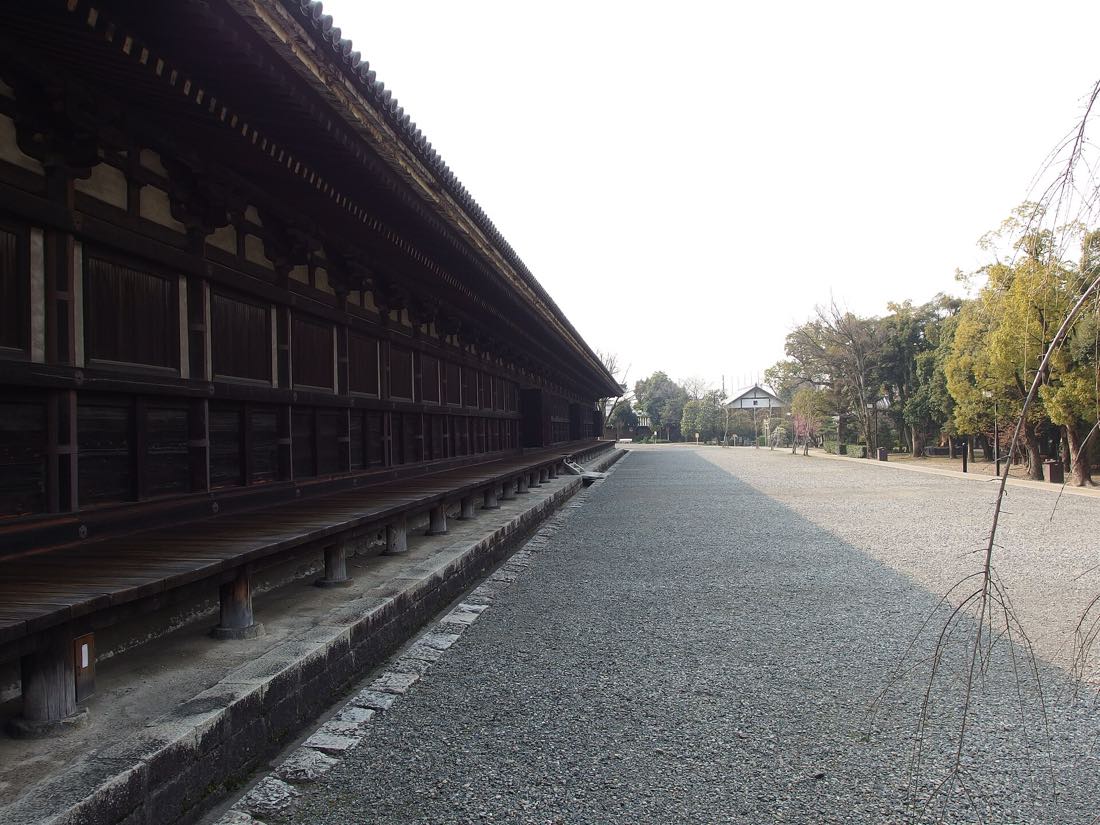
You walk the length of a 120-metre hall past 1,001 life-size gilded figures standing ten deep on tiered platforms, with 28 guardian deities in front of them and a three-metre seated Kannon in the middle. It is overwhelming in a way no photograph would convey, which is convenient, because you are not allowed to take one.
The hall dates to 1266, a rebuild after fire, and 124 of the statues survive from the original twelfth-century commission. Each figure is carved from Japanese cypress and covered in gold leaf, and each has forty arms — in the doctrine, every arm saves twenty-five worlds, which gets you to a thousand.
The name means thirty-three intervals, counting the spaces between the pillars down the length of the hall. Walking it takes about ten minutes if you do not stop. Nobody does not stop.
The 28 guardians ranked along the front are the sleeper attraction — individually carved, wildly expressive, and among the finest Kamakura-period sculpture anywhere. The wind god Fujin and thunder god Raijin at either end are the two on the postcards in the gift shop, because they are the two nobody can photograph in the hall.
No photography inside. Phones away, and the staff enforce it. The effect is a hall of people actually looking at something instead of framing it, and it is the clearest demonstration in Kyoto that the camera is what breaks these places.
Outside, the west veranda is where the Toshiya archery contest has been held since the Edo period — archers shooting the full 120-metre length of the building. The modern version runs in January with young archers in kimono, and it is free to watch from the grounds.
Is Sanjusangendo for you?
The practical bit
Fitting Sanjusangendo into a day
¥600 in cash at the door, no booking, and no queue worth mentioning. What is worth buying is a route that puts this next to the other eastern sights instead of stranding it on its own. Temple gates take cash at the door and never sell out — a tour is worth paying for because of the guiding and the hour, not to skip a queue that does not exist.
Sanjusangendo FAQ
Why is Sanjusangendo not more famous?
Because you cannot photograph it. Photography is banned inside the hall, so it has never had a viral image, and Kyoto's crowds now follow images almost exclusively. It is ¥600, 20 minutes' walk from Kyoto Station, and repeatedly described in reviews as the best thing people did on their trip.
How many statues are in Sanjusangendo?
One thousand and one Kannon figures — a thousand standing in tiered ranks and one large seated figure in the centre — plus 28 guardian deities and the wind and thunder gods at either end. Each standing figure has forty arms and eleven heads, and 124 of them survive from the twelfth century.
Can you take photos inside Sanjusangendo?
No. Photography and video are prohibited throughout the interior and it is actively enforced. You can photograph the grounds and the exterior of the hall. Buy a postcard on the way out — it is the only image you will get, and honestly the hall is better without a phone in front of it.
How long does Sanjusangendo take?
Forty-five minutes to an hour. The hall is 120 metres long and the route is a single walk down one side and back along the other. Add 90 minutes if you cross the road to the Kyoto National Museum, which is the natural pairing.
What time does Sanjusangendo open and close?
Roughly 8:30 to 17:00 from April to November and 9:00 to 16:00 in the winter months, with last entry about 30 minutes before closing. The schedule shifts seasonally, so confirm on the official site the morning you go rather than trusting a printed guide.
Is Sanjusangendo good in the rain?
It is the best wet-weather sight in Kyoto after teamLab. The entire visit is under a roof, the floor is level, it is warm in winter, and rain does nothing to the experience. Chain it with Nijo Castle and teamLab Biovortex for a full indoor day.
Is Sanjusangendo wheelchair accessible?
Yes, and it is one of the few headline sights in Kyoto that genuinely is. The hall is flat, the route is level, and there is no hillside approach. Kiyomizu-dera up the hill is the opposite case entirely.