Should you stay
downtown?
Downtown Kyoto — Kawaramachi, Karasuma, Pontocho and Kiyamachi — is where most people should book. Two subway lines cross here, the Hankyu runs direct to Osaka-Umeda, Kyoto Station is 4 minutes and ¥220 away, and Gion is a 12-minute walk east over Shijo bridge. It does not look like old Kyoto — this is department stores, covered arcades and neon — but you will eat better, pay $100 a night less than Gion, and never wait for a bus. Book west of Karasuma-dori if you are a light sleeper.
Who downtown is for, and who should avoid it
Downtown wins on the two things that actually decide a Kyoto trip: how long it takes to get anywhere, and how easy dinner is at 20:30 with no reservation. It loses on atmosphere, and that is the whole trade.
Stay here if it is your first trip, if you are travelling with people who tire at different rates and need to peel off, if you want restaurants rather than a hotel dining room, or if you are here three nights or fewer and cannot afford transit friction. Families do well here too — bigger rooms, lifts, flat pavements, conbini on every corner.
Avoid it if you came to Kyoto specifically for the lantern-lit-lane version of the city, because downtown is a modern shopping district with a beautiful river running down one side. Avoid the streets immediately around Kiyamachi if you sleep lightly — that strip is bars and it runs until roughly 01:00. Move two blocks west of Karasuma-dori and it is markedly quieter, or take a room facing away from the canal.
The geography is simple. Kawaramachi is the eastern edge, on the Kamo River, closest to Gion and to the nightlife. Karasuma is the business spine 900 metres west, where the subway crossing and the calmer hotels are. Between them run the covered Teramachi and Shinkyogoku arcades and Nishiki Market. You can cross the whole district on foot in fifteen minutes.
Compared against the obvious alternative on Gion vs Downtown. Every other district is on the where to stay hub.
What to do downtown
Downtown is not a sightseeing district — it is the place you sleep, eat and pass through. That said, four things here are worth deliberate time.
Nishiki Market, the 400-metre covered food street, is free to walk and best before 10:00 or after 15:00; tour groups flood it around 11:30. Eating while walking is discouraged, so eat at the stall you bought from. Honest verdict and what to actually buy on the Nishiki page.
The Kamo River is the best free thing downtown. Walk the east bank between Sanjo and Shijo at dusk with a conbini beer and you will understand the city faster than at any temple. From May to September the restaurants on the west bank open their kawayuka platforms out over the water — the seasonal splurge worth booking.
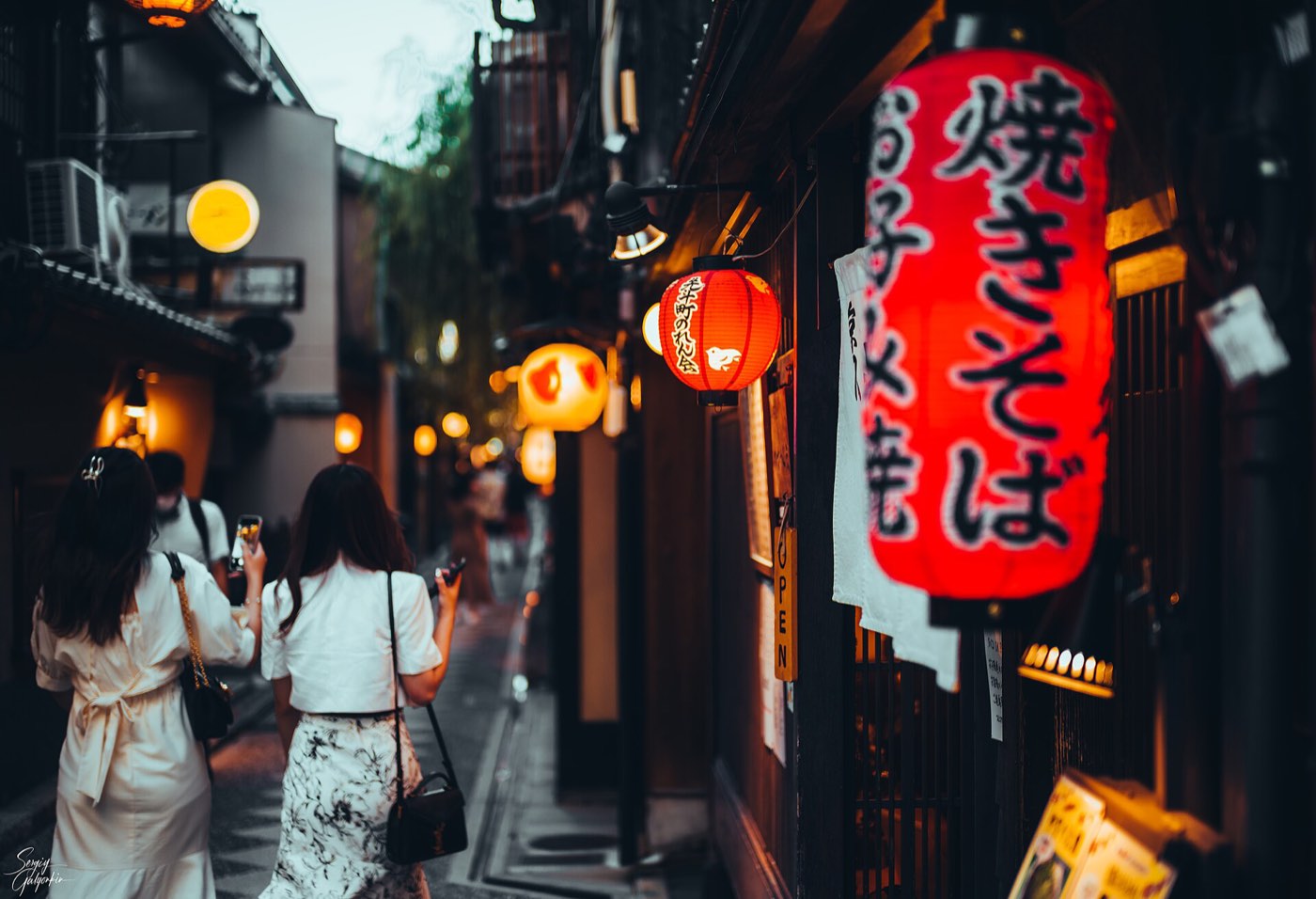
Pontocho and Kiyamachi are two parallel alleys running north from Shijo. Pontocho is the narrow lantern-lit one and is a beautiful free walk after dark; Kiyamachi, one street west along the canal, is where the bars are.
Nijo Castle is a 5-minute subway ride west on the Tozai line, ¥800 for the grounds or ¥1,300 with the nightingale floors of Ninomaru Palace — see the Nijo page. The Manga Museum is a 10-minute walk north at ¥1,200, closed Wednesdays, and is a solid rainy-day answer along with the rest of the rainy day list.
Where to eat downtown — and the Pontocho trap
There are several thousand restaurants inside this square kilometre, which makes downtown the only district where you can decide at 20:00 and still eat well. One warning first.
Pontocho, honestly: the alley is gorgeous and the walk is free, but the ground-floor places with English menus, photographs and a greeter outside are priced for people who wandered in. Go one street parallel onto Kiyamachi, or upstairs to a second floor, or down into a basement — the same alley, a third off the bill, and the food is better. The alley itself is worth walking regardless.
The reliable no-reservation fallback is a department store: Takashimaya and Daimaru both sit on Shijo, both have restaurant floors upstairs and a depachika food hall in the basement. The restaurant floors take walk-ins at 19:00 on a Saturday, which almost nothing else in Kyoto does, and the basements are the cheapest good dinner in the city if you take it back to your room.
By category: Nishiki and the surrounding grid for obanzai and standing bars; Kiyamachi for izakaya; the Karasuma side for coffee and bakeries, which Kyoto does unusually well. Kyoto ramen is dark and back-fatty rather than delicate — see the ramen page. For the money-no-object meal, kaiseki at lunch costs roughly half of dinner.
Two things to expect: otoshi, a ¥300–800 seating charge at izakaya that comes with a small dish and is not a scam, and no tipping, ever. The wider picture is on the Kyoto food page.
Downtown, practically
Where to sleep downtown
The range here is wider than anywhere else in Kyoto: hostel bunks under $40, the Ritz-Carlton on the riverfront at $1,200+, Hotel The Mitsui and the Hilton in between, Ace Hotel Kyoto at $300–450 in the old telephone exchange, Cross Hotel at $200–300, the Gate Hotel Takasegawa on the canal — and the two ryokan everyone measures the rest against, Tawaraya and Hiiragiya, facing each other on the same street.
Food tours that start on your doorstep
Downtown is the one district where a food tour genuinely earns its price: the good places have no English menu, no photographs and a queue, and a guide gets you through the door of four of them in an evening.
Staying downtown FAQ
Is downtown Kyoto a good place to stay?
It is the best default. Two subway lines cross at Karasuma-Oike, Kyoto Station is 4 minutes and ¥220 away, Gion is a 12-minute walk, and you can eat anywhere at any price. You give up the old-Kyoto look outside your window, which most people trade happily once they have walked Gion twice.
Is downtown Kyoto noisy at night?
Only in one place. Kiyamachi, the canal strip of bars, runs until around 01:00 and rooms facing it get noise complaints in reviews. Everything west of Karasuma-dori is quiet, and even Kawaramachi is calm by midnight on a weeknight — Kyoto is not a late city.
How far is downtown Kyoto from Gion?
Twelve minutes on foot across Shijo bridge, or one stop on the Keihan from Gion-Shijo. That short walk is the entire argument for booking downtown instead of paying Gion prices: you get the district in the evening without paying for it overnight.
Is Pontocho a tourist trap?
The alley is not — it is a free, beautiful, lantern-lit walk. Some of the restaurants on it are. The ground-floor places with photo menus and a greeter charge a premium for the address. Go one street west to Kiyamachi, or upstairs, or into a basement, for the same food at a third less.
What is kawayuka and when can I do it?
From roughly May to September, restaurants along the west bank of the Kamo River build wooden platforms out over the water and serve dinner on them. It is a Kyoto institution, it costs a premium over the same restaurant's indoor menu, and the good riverside slots book out in July and August.
Where should I stay in Kyoto with kids?
Downtown, in most cases. Rooms are bigger than in Higashiyama, there are lifts instead of stone steps, conbini are everywhere for the 6am hunger, and the subway means no bus queues with a pushchair. More on Kyoto with kids.
Can I get to Osaka easily from downtown Kyoto?
Yes, better than from Kyoto Station for some trips. The Hankyu from Kawaramachi runs direct to Osaka-Umeda in about 45 minutes for ¥410. If you want speed instead, take the subway to Kyoto Station and the JR Special Rapid — 29 minutes, ¥580.