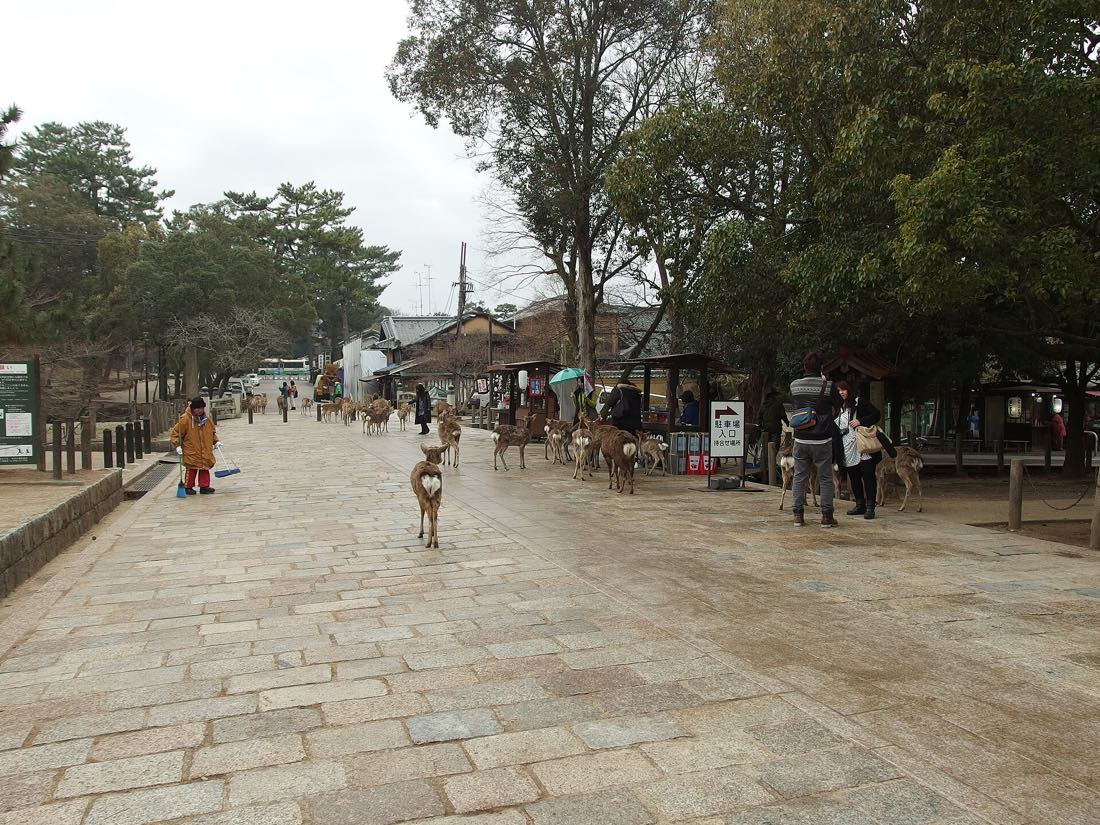
Is a Nara day trip worth it?
Yes, and it is the easiest good decision on a Kyoto trip. Take the Kintetsu express: 45 minutes, ¥760, or the limited express at 35 minutes for ¥1,280 — both beat JR unless you hold a JR Pass, because Kintetsu's station is a five-minute walk from the park and JR's is eighteen. Todai-ji's Great Buddha Hall (¥800) holds a 15-metre bronze Buddha inside one of the world's largest wooden buildings, and it is the single most impressive object within an hour of Kyoto. Around 1,200 deer roam the park and bow for ¥200 crackers. Be there before 10:00 and half a day covers it.
Kintetsu beats JR, and it is not close
Kintetsu Kyoto Station sits inside the same building as JR Kyoto Station. The express takes 45 minutes and costs ¥760; the limited express takes 35 and costs ¥1,280 with a reserved seat.
The reason is the arrival, not the journey. Kintetsu Nara station is a five-minute walk from the edge of Nara Park. JR Nara station is about eighteen minutes away on foot, or a bus ride, at the wrong end of town. On a half-day trip that difference is half an hour of your day in each direction.
The one case for JR is a JR Pass or a Kansai Wide Area Pass in your pocket, which makes the JR run free at the point of use. Even then, many pass holders pay the ¥760 for Kintetsu and consider it money well spent. See the pass verdicts.
Do not book the limited express unless you want the seat. The ordinary express runs several times an hour, needs no reservation, and saves you ¥520 for ten extra minutes. Tap an IC card and walk on.
Pair it with a dawn start. Nara and Fushimi Inari both sit on the axis running south from Kyoto Station. Fushimi Inari at 06:30, back on a train by 09:00, in Nara before 10:00 — that is the best single day available to a Kyoto visitor and it costs about ¥1,700 in fares.
What hour to go to Nara Park
The park itself is open ground and never closes; the deer are always there. Todai-ji's Great Buddha Hall runs roughly 07:30–17:30 in summer and 08:00–17:00 in winter, so the hours below are about the park, with the hall's crowd folded in.
Filling. Coaches start arriving and the cracker sellers get busy. Still comfortable inside the Great Buddha Hall.
Todai-ji, Kasuga Taisha and the park
Nara was Japan's capital before Kyoto was, from 710 to 794, and its temples are correspondingly older and larger. Everything worth seeing sits inside one walkable park.
Todai-ji's Great Buddha Hall — ¥800, and the reason you came. The Daibutsu inside is 15 metres of bronze, cast in the eighth century, and the hall around it is one of the largest wooden buildings in the world — and it is a two-thirds-scale rebuild of an even bigger original. You walk in through the Nandaimon gate past two 8-metre wooden guardians carved in 1203. Behind the Buddha there is a pillar with a hole in its base the size of the Daibutsu's nostril; children crawl through it and it is the thing every family remembers.
Kasuga Taisha — free grounds, ¥500 inner area. A vermillion shrine at the end of a forest path lined with around 3,000 stone lanterns, with another 1,000 bronze ones hanging from its eaves. Donated over eight centuries. The walk up through the trees is as good as the shrine.
Nara Park — free, and the deer are the memory. Roughly 1,200 sika deer roam 500 hectares. They are wild animals designated a natural monument, not petting-zoo stock, and they have been protected here for over a thousand years.
Nakatanidou — free, and time it. A mochi shop near the Kintetsu station whose staff pound rice at extraordinary speed with a wooden mallet, shouting as they go, several times an hour. It is a genuinely thrilling 60 seconds and it costs nothing to watch. The yomogi mochi afterwards is about ¥150.
Naramachi — the old merchant quarter south of the park, with lattice-fronted townhouses, small craft shops and cafés. This is what turns a half day into a full one, and it is where to be at midday when the park is at its worst.
The Nara deer rules, written straight
The deer are wild, they are used to people, and they will absolutely mug you for a cracker. Nobody is in danger, but the polite fiction that they are gentle woodland creatures gets people bitten every year.
Crackers are ¥200. Shika senbei, sold from stalls around the park by licensed vendors, made of rice bran and flour with nothing in them that harms the deer. Buy from a stall away from the busiest lawn unless you want twenty deer arriving at once. Do not feed them anything else — not conbini snacks, not bread, not sweets.
Bow, and they bow back. Many of the deer around the main stalls have learned to nod for food. It is a trained behaviour, it is charming, and it is the shot everyone wants. Hold the cracker up, bow, and they usually oblige.
Show your empty hands when you are out. Open your palms and hold them up. The deer understand this and move on. What causes trouble is holding crackers behind your back or high in the air while a queue forms — that is when they head-butt, nip and pull at clothing and bags.
Autumn is different. The rut runs roughly September to November and the stags get genuinely pushy — heavier, bolder and less patient. The park cuts their antlers each October in a formal ceremony precisely because of this. Injury reports rose after the pandemic as visitor numbers rebounded, a video of a tourist kicking a deer went viral and caused a national row, and the park has increased patrols and multilingual signage in response. Take it seriously in autumn, especially with small children.
Also true: they will eat your map, your ticket and the paper bag your souvenir came in. Keep paper in a zipped bag. And do not let a child hold a cracker at deer-head height.
Is a Nara day trip for you?
The practical bit
Nara tours worth considering
Nara is genuinely easy to do yourself with an IC card and no plan — the park is one walkable block of sights. Temple gates take cash at the door and never sell out — a tour is worth paying for because of the guiding and the hour, not to skip a queue that does not exist. A guide buys you the eighth-century context and an earlier arrival than you would organise alone.
Nara day trip FAQ
Is Nara worth a day trip from Kyoto?
Yes — it is the best half-day out of Kyoto and the one most trip reports single out. Forty-five minutes and ¥760 each way, one ¥800 entry, and the Great Buddha is the most impressive single object within an hour of Kyoto. Half a day covers the park; a full day adds Naramachi.
Should I take JR or Kintetsu to Nara?
Kintetsu, unless you hold a JR Pass. The express is 45 minutes and ¥760 and its station is a five-minute walk from Nara Park, while JR Nara station is eighteen minutes away. The Kintetsu limited express is 35 minutes for ¥1,280 with a reserved seat, which is rarely worth the extra.
Do the deer in Nara bite?
They nip, head-butt and pull at clothing when they think you are holding out on them — usually when someone is waving a cracker above their head. Show open palms to signal you are out and they move on. The autumn rut, roughly September to November, makes the stags genuinely pushy, which is why the park holds an antler-cutting ceremony each October.
How much are the deer crackers in Nara?
¥200 a bundle from licensed stalls in the park. Buy them away from the busiest lawn unless you want twenty deer arriving at once, and feed them nothing else — no conbini snacks, no bread. The money supports the deer protection foundation.
How long do you need in Nara?
Four to five hours covers Todai-ji, Kasuga Taisha and the park comfortably. A full day adds Naramachi's merchant streets in the afternoon and the Nara National Museum. Arrive before 10:00 and eat in Naramachi at midday, when the park is at its worst.
Can I do Nara and Fushimi Inari in the same day?
Yes, and it is the best day available from Kyoto. Fushimi Inari at 06:30 while it is empty, back on a train by 09:00, in Nara before 10:00. Both sit on the southern axis out of Kyoto Station, and the fares total about ¥1,700.
Is Nara good for kids?
It is the best family day in the region. Deer that bow, a 15-metre bronze Buddha, and a hole in a temple pillar that children crawl through for luck. The one caution is the autumn rut, when the stags are pushy enough to knock over a small child.
Nara or Uji — which day trip should I do?
Nara on a first trip, Uji on a second. Nara has the bigger single sight and the deer; Uji is 17 minutes and ¥240 away, quieter, and built around matcha, Byodo-in and the Nintendo Museum. The full comparison is on Nara vs Uji.